Articles
Three Themes That Defined the First Half of 2026 for Genomics
By Ettore Rizzo, CEO, enGenome
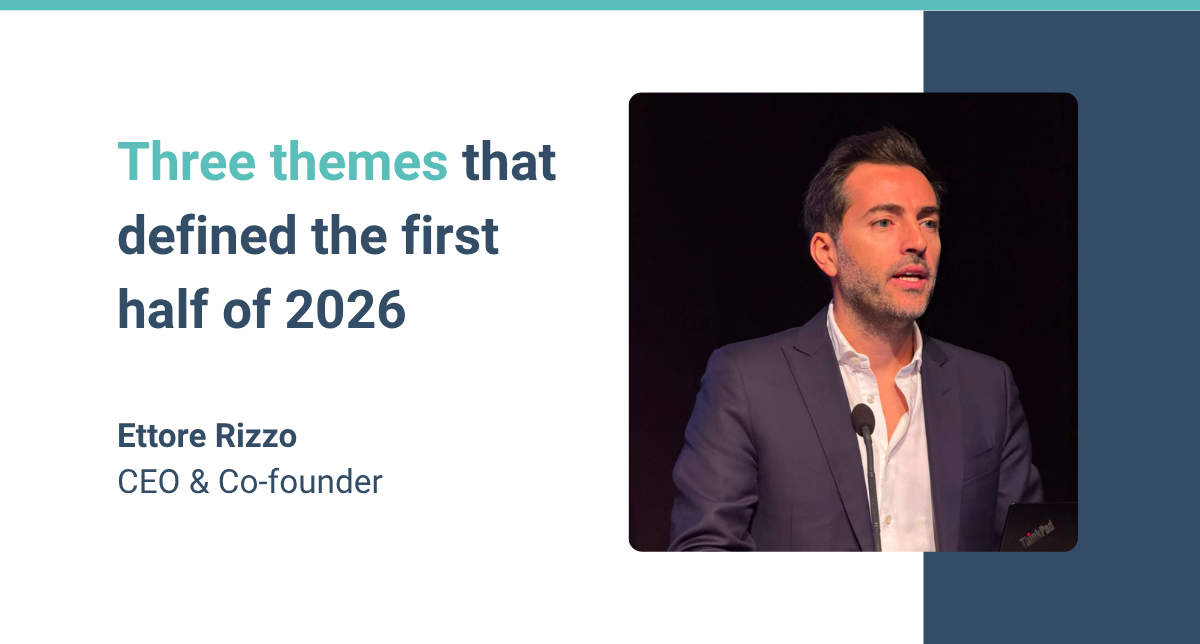
As summer approaches, I’ve taken a moment to reflect on the first half of the year. One thing is clear: genomic medicine continues to advance at an extraordinary pace. Yet alongside the scientific progress, there has been a strong undercurrent running through many customer conversations and events I have attended. How do we continue to scale genomic testing and interpretation in an increasingly constrained healthcare environment?
Three themes have stood out to me.
1 - AI Is Now Mainstream, But Trust and Compliance Matter More Than Ever
Just a few years ago, artificial intelligence in genomic interpretation was often presented as a future vision. Today, that conversation has changed completely.
Across the ESHG Annual Meeting that took place in June in Gothenburg, Sweden, AI was everywhere. Whether discussing variant prioritization, phenotype matching, literature mining, report generation, or workflow automation, there is now broad recognition that AI has become an essential component of modern genomic interpretation.
At the same time, the conversation has matured. The focus is no longer simply on what AI can do, but how it can be deployed responsibly within a regulated clinical environment.
Awareness of regulatory requirements such as IVDR and the EU AI Act has increased significantly. Laboratories and technology providers are increasingly asking questions about validation, transparency, traceability, explainability, and compliance. Some established players are still operating under IVDD certifications and continue their transition toward IVDR, others operate as Class A manufacturers under a self-declared conformity framework. Meanwhile, many newer entrants are only beginning their regulatory journey.
What was equally striking was the continued recognition that AI does not replace human expertise. Clinical interpretation remains fundamentally a scientific and medical decision-making process. AI can accelerate analysis and reduce manual effort, but experienced geneticists, molecular biologists, and clinicians remain essential for ensuring accuracy, context, and patient safety.
The future is not AI replacing experts. It is AI enabling experts to work faster, more consistently, and at a greater scale.
2 - ACMG SVC v4.0 Is Moving from Discussion to Implementation
Another major topic throughout the ESHG conference was the ongoing evolution of variant interpretation standards, particularly ACMG 4, formally known as the ACMG/AMP/CAP/ClinGen Sequence Variant Classification Recommendations v4.0.
The framework was discussed extensively across scientific sessions and industry conversations, with many laboratories now actively preparing for adoption. The final phase of the pilot programme has officially been launched in July, marking an important milestone toward broader implementation.
The significance of ACMG 4 extends beyond guideline updates. It reflects the continued maturation of variant interpretation and the drive for greater consistency and reproducibility across laboratories.
For diagnostic teams, however, every change in classification frameworks creates operational challenges. Historical interpretations may need reassessment, workflows must be updated, and interpretation teams must adapt to new evidence structures and decision-making criteria.
As standards become more sophisticated, software that can operationalize guidelines, automate evidence collection, navigate decision trees, and support consistent interpretation becomes increasingly important.
3- Long-Read Sequencing Continues to Build Clinical Momentum
Long-read sequencing has been a recurring topic throughout my customer conversations and event attendance over the last few months.
The clinical evidence supporting long-read technologies continues to grow, particularly in areas such as structural variants, repeat expansion disorders, complex genomic regions, episignature detection, and rare disease diagnostics. The increasingly comprehensive, 360-degree information that can be derived from long-read WGS has opened the way to what Alexander Hoischen and colleagues have described as “near-perfect genome sequencing”: a broader technological convergence in which long-read sequencing, diploid genome assembly, pangenome references, methylation profiling, variant phasing, and AI-driven interpretation have the potential to move clinical genomics towards a more complete, one-test diagnostic paradigm.
At the same time, there remains significant debate around how quickly long-read sequencing will move into routine clinical practice.
Questions around cost, throughput, reimbursement, workflow integration, and clinical utility at scale remain unresolved. While enthusiasm is growing, the path toward widespread adoption is still being actively debated.
Perhaps the most pressing of these challenges is reimbursement. Across the global genomics community, a concerning trend is emerging: significant reductions in reimbursement for clinical sequencing. Changes to these financial frameworks have far-reaching implications that impact how quickly new technologies can be adopted.
For laboratories, lower reimbursement means that efficiency is no longer just a competitive advantage; it is a necessity. The economics of genomic testing are fundamentally changing. Clinical teams are being asked to process more samples, manage the increasingly complex data generated by long-read technologies, comply with evolving guidelines, and maintain high-quality standards, often with fewer resources available per case.
In this environment, scalable interpretation workflows become critical. Automation, AI-assisted analysis, standardized processes, and integrated software platforms are no longer simply productivity tools. They are becoming essential infrastructure for sustaining access to genomic medicine.
What seems increasingly clear is that long-read sequencing is no longer viewed as a niche research technology. It has established itself as a serious clinical tool, even if the timeline for broader implementation remains uncertain.
The Next Phase of Genomic Medicine
Despite these challenges, my overall impression from the year to date is overwhelmingly positive.
The science continues to advance. Clinical adoption continues to grow. AI capabilities continue to mature, as AI continues to unlock new potential. New sequencing technologies continue to emerge. And the collective expertise across our field has never been stronger.
However, the next phase of genomic medicine will not be defined solely by scientific discovery. It will be defined by our ability to deliver genomic insights efficiently, consistently, compliantly, and sustainably at scale.
Achieving that balance between innovation, quality, and efficiency will be one of the defining challenges, and opportunities, for our industry in the years ahead.